Friday, August 9, 2019

OCPA column: Stitt right to seek review of casino fees


Stitt right to seek review of casino fees
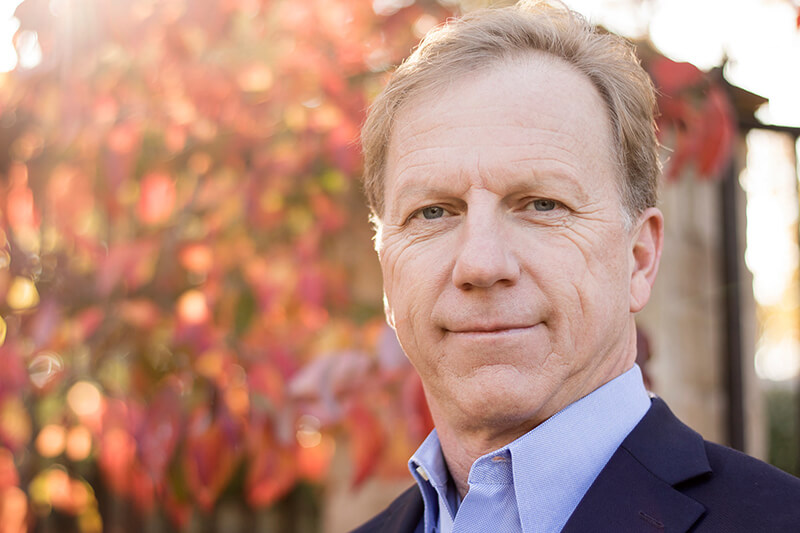
by Jonathan Small

In discussions of tax policy, the issue of “fairness” often arises. So here’s a simple question. Is it fair to impose a larger tax penalty on people for drinking water than for operating a casino? If you’re among those who think running slot machines should be taxed at the same rate, if not higher, than what people face when trying to rehydrate on a hot summer day, you should welcome Gov. Kevin Stitt’s call to renegotiate Oklahoma’s gaming compacts.

In Oklahoma, the combined state-local sales tax rate on a bottle of water averages 8.94 percent, but the state fee on casino slot machines is just 6 percent. That’s not the only comparison in which Oklahoma’s casino fees stand out.

In other states, tax rates on non-tribal casinos routinely run between 20 and 40 percent. Some will object that it’s not fair to compare tribal casinos with non-tribal operations. But even when examining only tribal casinos, it’s clear that Oklahoma’s casinos are paying a pretty low rate. Elsewhere, tribal casinos may pay fees of around 20 percent, and it’s estimated 44 percent of tribal gaming compacts nationwide include fees of 10 percent or greater.

Oklahoma’s gaming compacts, which expire at the end of this year, provide tribes with significant advantages—including virtual exclusivity or monopoly of casino revenue and operation, casino revenue-base subject to fees, and other provisions.

Put simply, tribal entities are given a near-monopoly on Las Vegas-style gambling in Oklahoma, and that has reaped them enormous financial gain. Oklahoma is now home to more than 100 casinos, a larger number than every state but Nevada and California, and billions go through those casinos. Casino gambling, as a share of Oklahoma’s GDP, has doubled since 2004, even after adjusting for inflation. Also, an unbiased analysis of the economic impact of gambling reveals that, especially in Oklahoma, gambling is first an extremely redistributive endeavor wherein billions of dollars are extracted from the normal economy.

As money pours through those casinos, the provisions limiting competition make those businesses roughly comparable to a utility with a monopoly, which puts the state in the business of determining fair prices.

Those opposed to changing gaming compacts argue the compacts continue in perpetuity unless both sides agree. That’s an interesting take since renegotiation isn’t likely to happen if a deal turns out to be lopsided in favor of one entity, and the state constitution and numerous laws restrict the ability of policymakers to forever bind future citizens.

Governor Stitt thinks it is time for the state to reassess whether the fees paid by casinos to Oklahoma government, which are supposed to go to education, are fair. As Oklahomans learn more about this issue, I think most people will agree with him.

Jonathan Small serves as president of the Oklahoma Council of Public Affairs.

from MuskogeePolitico.com

[MuskogeePolitico.com] Hern kicks off reelection campaign; Tribes flip-flop in gaming fight from past tax views

Advertise with MuskogeePolitico.com!
View this email in your browser

The latest news on MuskogeePolitico.com:

If you are interested in advertising on MuskogeePolitico.com, or have news tips, send an email to JamisonFaught@MuskogeePolitico.com.
Copyright © 2019 Muskogee Politico, All rights reserved.
You are receiving these emails because you opted in at MuskogeePolitico.com or through social media.

Want to change how you receive these emails?
You can update your preferences or unsubscribe from this list

Email Marketing Powered by Mailchimp


from MuskogeePolitico newsletter Archive Feed

Thursday, August 8, 2019

Rep. Hern's re-election rally to feature Freedom Caucus Rep. Jim Jordan


Rep. Kevin Hern is holding a re-election campaign rally on Saturday, featuring special guest Rep. Jim Jordan (R-OH). Jordan is the Ranking Member of the House Oversight Committee and a co-founder of the conservative Freedom Caucus.


The rally will be held on Saturday, August 10, at 2:00 PM, and will take place at the Stoney Creek Convention Center located at 200 W. Albany Street in Broken Arrow.

from MuskogeePolitico.com

Hern introduces bill on emergency communications during floods


Rep. Hern Introduces Bill to Address Emergency Communications During Floods

Tulsa, OK – At the end of July, Representative Kevin Hern (OK-01) sponsored his first bill as a Member of Congress. H.R. 3944 amends the Water Resources Reform and Development Act, addressing the communications shortfalls Oklahomans experienced during the flooding this past May.

“Seeing firsthand the disaster that hit our community in May, I had to do something,” said Rep. Hern. “I spoke with people in our community, met with officials from FEMA, the Army Corps of Engineers, emergency responders, and city leaders to determine what went wrong and how we could better prepare for floods like this in the future. It was clear that communication paths needed a fix. This bill will streamline communication of risk from the moment that the National Weather Service forecasts potential flooding. I hope this will help our community and other like it across the country prevent disasters like what we experienced in May from happening again.”

BACKGROUND:
This spring, Oklahoma’s First District was devastated by flooding. Unfortunately, while the Army Corps of Engineers always do well to respond in these situations, failing infrastructure and bureaucratic hurdles hamper their overall ability to provide adequate emergency communications.

Because of this, Congressman Hern is introducing this legislation to add another tool to the Army Corp’s belt. This reform will grant the Army Corps of Engineers the ability to better communicate impending disasters with our community and potentially give our constituents more time to prepare for flooding in the future. While we can’t stop these disasters from occurring, we can always be more prepared, and this bill will help us to achieve that.

This bill requires the Army Corps of Engineers to send emergency communications earlier, so constituents are better protected against disaster.

  • Currently, the U.S. Code directs the Army Corps of Engineers to only send out emergency communications when “precipitation or runoff exceeds those calculations considered as the lowest risk to life and property.”
  • This bill would adjust this requirement so that the Army Corps of Engineers would also send this emergency communication when the National Weather Service forecasts the possibility of precipitation or runoff exceeding calculations considered the lowest risk to life and property.
  • This would better help local and state governments to make more informed plans ahead of time to prepare constituents, and to help them to better preempt any dangers caused by water releases.

QUESTIONS ABOUT H.R 3944

Would this bill force the Army Corps of Engineers to make releases before flood water accumulates on the ground?
No, this bill would do nothing to change the Army Corp of Engineer’s policy of not making releases until water accumulates, as is safer due to changing forecasts.


Rather, this bill will ensure quicker emergency communications from the Army Corps to localities so that constituents would get a more advanced notice of impending floods, and so that they would be able to react accordingly.

What if the forecasts under-anticipate the amount of precipitation?
Congressman Hern understands the potential errors of forecasting. Because of this, H.R.3944 requires emergency communication from the Army Corps when the forecasts require it, and when precipitation and run-off actually exceeds those calculations considered as the lowest risk to life and property, as is currently utilized.

In having both of these events as triggers for emergency communications, Congressman Hern’s bill will also protect constituents in the off-chance that flooding is not forecasted, but still occurs.

The bill text can be found here.

from MuskogeePolitico.com

Wednesday, August 7, 2019

Rep. Kevin Hern launches re-election campaign


Rep. Kevin Hern launches re-election campaign

Tulsa, OK - Representative Kevin Hern announced his campaign for re-election in 2020 this morning.

"After nearly three successful years of Donald Trump's presidency, it is clear that solutions-oriented leaders are what we need in Congress," said Rep. Hern. "While Democrats have wasted their first year in the majority with chaos and internal battles, Republicans have stayed true to the values the American people sent us here to represent.”

Rep. Hern continued, “I am proud to be a leading voice for business owners, working in Congress to remove the burdensome regulations that our government imposes on small businesses. The immigration fight has lasted decades, but the crisis on our border has finally gotten Congress to pay attention and do something about it. I’ve supported several bills, some of which are now law, helping our veterans get access to the care and benefits they deserve. I'm launching my re-election today with the hopes that we will take back the majority in the House next year and spend the next several years furthering President Trump's pro-growth agenda, helping our business owners thrive, and taking care of our veterans. There’s a lot of work left to be done. I can’t wait to continue the work for Oklahoma’s First District."

from MuskogeePolitico.com

Dahm, Gann celebrate signing of government transparency bill


Sen. Nathan Dahm and Rep. Tom Gann attend a ceremonial bill signing of Senate Bill 316 with Gov. Kevin Stitt in the Blue Room at the State Capitol. Pictured left to right: Carla Ray, legislative assistant to Rep. Gann, Sen. Dahm, Gov. Stitt, Rep. Gann and his wife, Debbie Gann.
Lawmakers See Bill Signed That Will Increase Gov. Transparency

OKLAHOMA CITY – Sen. Nathan Dahm and Rep. Tom Gann today observed as Gov. Kevin Stitt ceremonially signed a bill that will increase transparency and accountability of the transfer of state dollars between state agencies and other entities.

Senate Bill 316 creates the Government Transparency Act of 2019, which requires state agencies to publish online the specifics of agreements with other entities when a transfer of public money will take place. The posting must be within 15 days of the agreement’s effective date. Agencies also are required to provide copies of the proposed agreements to appropriate legislative committees.

“Many of our state agencies have entered into memorandums of understanding or agreements with other state agencies, public entities, or even foreign governments,” said Sen. Dahm, R-Broken Arrow. “However, most of these are done without public input or knowledge. State government should work to be open and transparent in working for the good of our citizens. This is a huge step forward in bringing that additional transparency for our citizens to further engage and investigate the actions of government to hold them accountable.”

Gann echoed his sentiments.

“Senate Bill 316 addresses the grand jury audit finding that found the Oklahoma Department of Health had transferred money to the Tobacco Settlement Endowment Trust without a proper memorandum of understanding or agreement in place,” said Rep. Gann, R-Inola. “This legislation, requiring state agencies to post those agreements online, enhances transparency and accountability on what monies are being exchanged between agencies. This is the proper way to conduct government business in full view of the public.”

The law becomes effective Nov. 1.

from MuskogeePolitico.com

1889 Institute: Make homebuying cheaper by repealing Abstractor licensing


1889 INSTITUTE SAYS “MAKE HOMEBUYING CHEAPER: REPEAL ABSTRACTOR LICENSING”
Title insurance in Oklahoma costs an extra $280 compared to the national average

OKLAHOMA CITY, OK (August 7, 2019) – The 1889 Institute has published “Abstracting: Licensure and Regulatory Impacts in Oklahoma,” which calls for deregulating abstracting in Oklahoma, including abolishing the Abstractors Board and ending abstracting licensing. Abstracting is the practice of researching the ownership history of a piece of property, usually in preparation for its sale. Oklahoma requires complete abstracts prepared for every property sale as a condition for purchasing title insurance, which is required for mortgaged property.

The report shows that, in addition to licensing abstractors, Oklahoma imposes other costly regulations on abstracting. These include requiring every abstracting company to maintain title records, separate from the county recording office, requiring a permit to create these records, requiring a licensed attorney to review every abstract, and requiring abstract companies to obtain a certificate of authority from the Abstractors Board.

“Having examined the laws of many other states, it appears that Oklahoma has done its best to make the buying and selling of real property as onerous and costly as possible,” said Mike Davis, author of the report and Research Fellow at the Institute.

Because of the way comparison data are reported and due to differences across states, it is difficult to determine all the impacts of Oklahoma’s excessive regulation of the abstracting industry. One impact is Oklahoma’s relatively high cost of title insurance. Another is that while Oklahoma has relatively few abstracting offices, given its population, it has an excessive number of individuals working in abstracting, as shown in the report’s statistical analysis.

“Given the statistical results, it’s obvious that excessive regulation had the result likely intended,” said Davis. “Relatively few offices means there is less overall competition, but the relatively high number of personnel indicates how much busy work is required by the regulations,” he said.

Davis summed up the study, saying, “Bottom line, by repealing licensing and needless regulation in abstracting, Oklahoma home buyers could save time, trouble, and money.”

About the 1889 Institute
The 1889 Institute is an Oklahoma think tank committed to independent, principled state policy fostering limited and responsible government, free enterprise and a robust civil society. The publication, “Abstracting: Licensure and Regulatory Impacts in Oklahoma” and other reports on licensing can be found on the nonprofit’s website at http://www.1889institute.org/licensing.

from MuskogeePolitico.com